Introduction
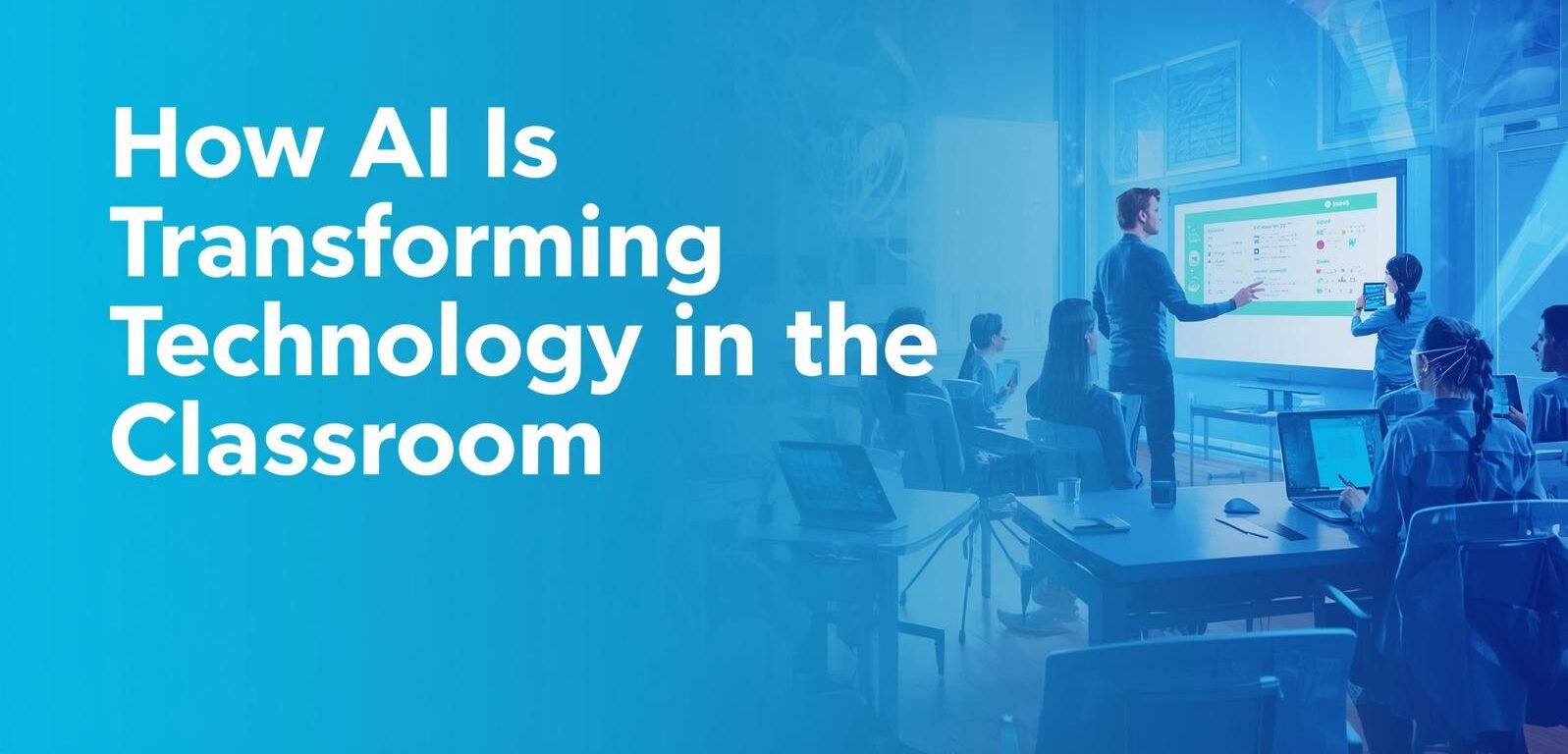
Walking into a modern school today, the shift is unmistakable — classrooms have evolved beyond textbooks into interactive learning environments driven by AI-powered tools. Technology integration is no longer optional; it is redefining how teachers approach instruction and how students absorb knowledge. The digital transformation sweeping education has quietly reshaped every corner of the classroom, turning static lessons into adaptive, responsive experiences that meet each learner where they are.
What makes this moment distinct is how AI technology addresses what traditional systems never could — personalized learning at scale. Students once confined to a single teaching pace can now explore subjects at their own pace, guided by real-time insights that surface strengths, flag weaknesses, and adjust curriculum accordingly. Performance tracking through data analysis means educators no longer guess; they act on evidence, creating smarter, more flexible learning pathways that genuinely improve learning outcomes for every student.
The practical reality is that AI is handling grading, administrative tasks, and assessment so teachers recover something invaluable — time. That reclaimed time flows directly into creative teaching strategies, deeper collaboration, and more meaningful communication with students. EdTech is not replacing educators; it is empowering them. As innovation continues accelerating, the future of smart technology in schools is not a distant prediction — it is already transforming how learning happens, every single day.
The Impact of AI on Classroom Technology
AI-Powered Tools Enhancing Learning
Artificial intelligence has quietly shifted how educators teach — not by replacing teachers, but by handing them sharper instruments. From real-time feedback on student performance to adaptive lesson pacing, AI now acts as the silent co-instructor that scales personalized instruction across every classroom.

What strikes me most, having observed several digital implementations firsthand, is how AI-powered tools actually close the gap between curriculum goals and individual learning needs. They analyze data continuously, surface insights about progress, and help tailor content before a student even raises a hand for support.
The shift toward interactive, responsive educational technology has also made assessment less of a checkpoint and more of a living signal. Teachers now track outcomes with real-time management systems that flag comprehension gaps early — turning knowledge into something measurable, flexible, and engaging at every step.
Statistics on AI Adoption in Education
Research confirms AI is becoming a key tool in schools worldwide, with adoption rates climbing as educators recognize its role in transforming learning experiences. Real-time performance data shows institutions integrating AI report stronger student outcomes and deeper classroom engagement consistently.
Today, over 60% of institutions already use interactive technology for teaching, reflecting genuine momentum in education. Teachers note AI helps connect content to individual needs, making lessons more fun, purposeful, and aligned with how students actually understand complex innovation in environmental settings.
Benefits of AI for Students and Teachers
AI-powered tools are redefining how educators approach instructional strategies inside the classroom environment. Through data-driven methods, teachers now access performance analytics that highlight knowledge gaps instantly, enabling more responsive, student-centered planning. Every educator I’ve worked with confirms: real decisions follow real data.
From my own observation, adaptive learning dramatically shifts student engagement toward deeper curiosity. When digital tools respond to a learner’s learning level, delivering immediate feedback and targeted practice, students feel seen rather than sorted. This personalized approach proves more effective than traditional one-size-fits-all delivery.
What excites me most is how AI-driven systems support continuous improvement across both roles. Teachers refine content delivery while students build critical thinking through interactive lessons and active learning cycles. The result is measurable academic performance growth, sustained by intelligent, responsive educational technology.
Smartboards: Revolutionizing Interactive Learning
Features of AI-Powered Smartboards
AI-powered smartboards have redefined how smart technology operates within a smart classroom, turning passive instruction into an interactive display experience. Unlike traditional boards, these systems embed AI integration directly into instructional design, supporting multi-user interaction while maintaining classroom management precision.

What distinguishes these educational tools from conventional equipment is their ability to integrate digital resources seamlessly, enabling collaborative learning in which multiple users engage simultaneously. This flexibility accelerates educational innovation, allowing boards to shift between individual and group activities without friction.
Teachers consistently report that advanced technology within these platforms drives efficiency across every session. From enriching the teaching experience to streamlining the deployment of integrated tools, the learning environment transforms fundamentally—making each lesson both seamless and efficient as a true teaching tool that continues to elevate classroom experiences.
How Smartboards Enhance Teaching Methods
Modern smartboards have quietly redefined what a lesson can feel like. With interactive display capabilities and touch screen interfaces, teachers deliver multimedia content — videos, animations — that anchor visual learning far better than static notes ever managed in traditional settings.
What strikes me most is how voice recognition and natural language processing let educators issue verbal commands mid-lesson without breaking momentum. This user-friendly design, paired with real-time collaboration and digital whiteboard functionality, makes content sharing across locations genuinely seamless and engaging.
Beyond presentation, collaboration tools enable simultaneous interaction among multi-user groups tackling shared projects. Handwriting recognition converts input to clean digital text, while NLP and speech recognition keep boards responsive — sustaining engagement through every phase of interactive instruction.
Overview of IMAGO’s AI-Powered Smartboards
IMAGO’s AI-powered smartboards redefine how educators deliver lessons — not just as display screens, but as smart technology hubs that sense classroom dynamics in real time. Built with AI features that adapt to teaching style, these boards bridge the gap between instruction and genuine student comprehension.
What separates IMAGO from conventional boards is its connectivity infrastructure. Whether in physical classrooms or remote learning environments, the platform sustains uninterrupted engagement — keeping students actively involved regardless of location, making interactive collaboration genuinely seamless and remarkably responsive.
Educators who’ve worked with IMAGO firsthand describe it as transformative. The board’s engaging interface doesn’t merely project content — it responds, adjusts, and evolves. This positions IMAGO not as a passive tool but as an active participant in the instructional process, fundamentally shifting classroom technology’s role.
Personalized Learning with AI Adaptive Learning Programs
Traditional classrooms rarely account for the reality that every student absorbs skills and understanding differently. Adaptive learning systems quietly observe how learners engage with academic success, then reshape the learning experience in real time — making this approach genuinely revolutionary rather than merely promotional.
What separates adaptive content from a standard curriculum is its reliance on student data. When a learner struggles with fractions, the system doesn’t move forward; it redesigns the path using differentiated learning principles. This data-driven intelligence creates a deeply personalized approach that no single teacher managing an entire class could consistently replicate alone.
From interactive quizzes to subject-specific games, engagement never feels forced — it emerges organically through content personalization and learning management tools that continuously refine lesson design. Students receiving more help or advanced material based on precise feedback aren’t exceptions; within intelligent systems, they are simply the standard.
Tailored Lesson Plans and Activities
What distinguishes genuinely effective curriculum design isn’t just subject coverage — it’s responsiveness. AI now enables educators to craft lesson plans that shift dynamically with each student’s pace, identifying gaps in understanding before they calcify. That precision reshapes how teachers approach planning entirely.
Beyond structure, AI-driven activities bring real-time adaptability into sessions. Rather than uniform exercises, students receive challenges calibrated to their readiness, reinforcing mastery through targeted practice while reducing frustration. This active calibration replaces guesswork with data-backed instructional alignment.
What surprised me most, working alongside educators using AI tools, was how personalized content shifted student ownership of learning. When a lesson genuinely reflects one’s needs, engagement follows naturally — not from novelty, but from the rare experience of feeling academically seen and appropriately challenged.
Improvement in Student Engagement and Performance
AI-powered tools have quietly redefined how student engagement unfolds inside smart classrooms. Unlike passive instruction, adaptive learning systems track student progress continuously, adjusting lesson pace dynamically. From my observation, classrooms using personalized feedback consistently report stronger academic performance and deeper motivation among learners.
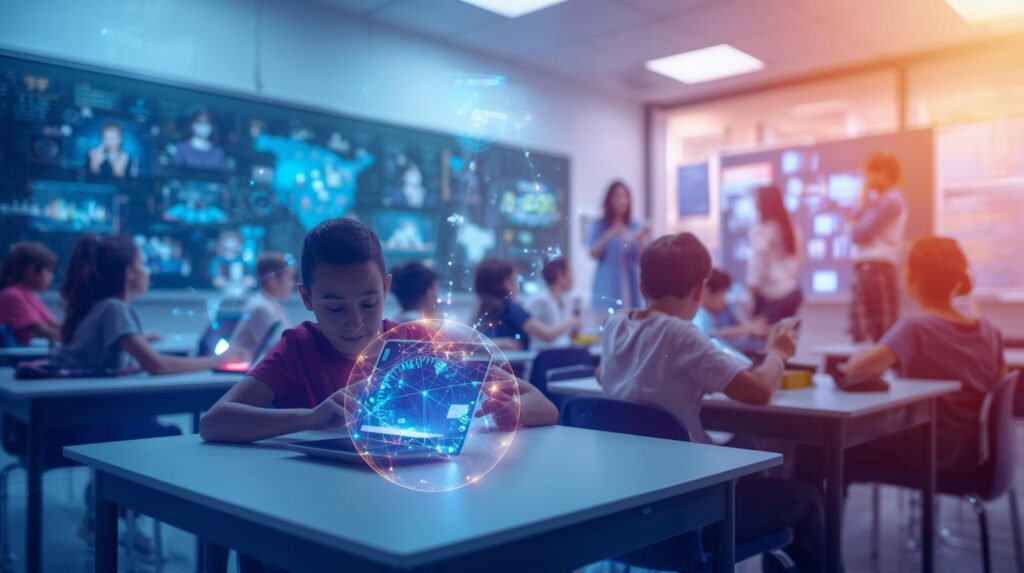
Personalized learning addresses individual needs by offering differentiated instruction through learning paths that match each student’s mastery level. Interactive learning environments supported by digital tools encourage participation, strengthen communication skills, and make learning fun — transforming even disengaged students into active, motivated contributors to group activities and discussions.
Real classroom evidence confirms that student success improves when responsive teaching combines with real-time feedback mechanisms. Performance tracking through data-driven analytics gives teachers meaningful insights into academic achievement, helping them adjust strategies and deliver impactful learning experiences. Engagement strategies powered by AI ultimately produce better outcomes across diverse student populations.
Future Trends of AI in Education
Predictions for AI Development in Schools
Schools are stepping into a future where AI technologies quietly restructure how knowledge reaches students. Virtual Reality and Augmented Reality are redefining immersive learning, giving students in history and science new dimensions to explore beyond traditional textbooks and lectures.
Natural Language Processing and NLP-driven virtual teaching assistants are already resolving student queries with instant support, tackling even the most difficult concepts at any hour. These emerging technologies are accelerating EdTech innovation alongside rapid digital transformation into smart classrooms.
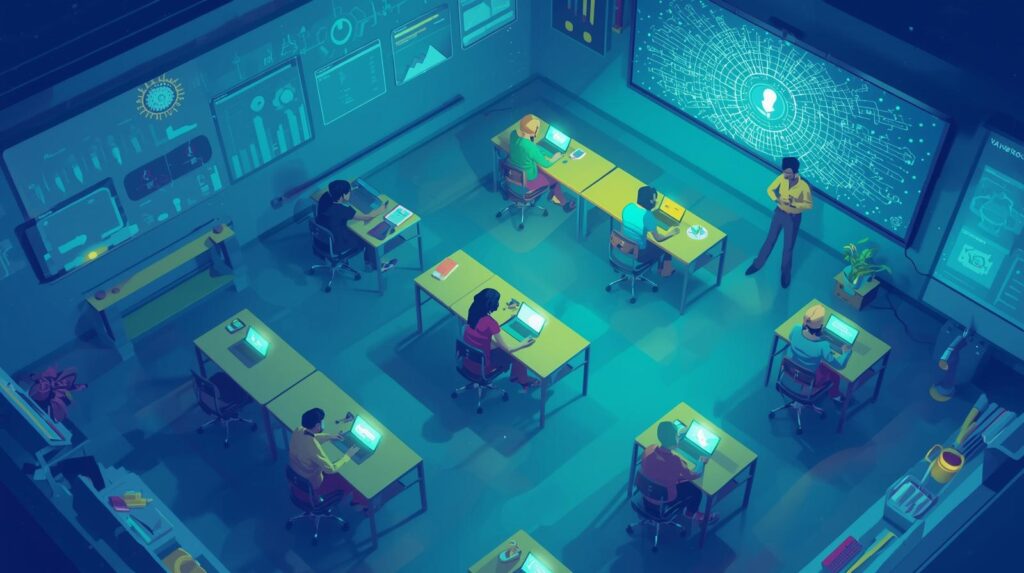
AI-driven simulation through 3D learning and speech recognition is reshaping content delivery and interactive content, creating data-driven environments where personalized learning becomes standard. These advanced technology solutions promise genuinely responsive, performance-focused learning environments through continued educational innovation.
Emerging AI Technologies to Watch
Generative AI and intelligent tutoring systems are quietly rewriting what learning outcomes look like inside schools. Having observed adaptive platforms in action, I’ve noticed they don’t simply deliver content — they track real-time behavioral cues, adjusting curriculum depth mid-session. That data-driven responsiveness separates modern AI-powered tools from everything that came before them.
Natural language processing now powers virtual assistants that handle student engagement queries outside formal school hours, while machine learning models flag at-risk learners before grades drop. Predictive analytics surface patterns no single teacher could spot across thirty students simultaneously — giving educators genuinely actionable intelligence rather than retrospective performance reports.
Immersive technologies like augmented reality and computer vision are pushing boundaries further still. When a student manipulates a 3D molecular structure mid-lesson, abstract concepts click faster than any textbook permits. Automation handles grading and scheduling, freeing classroom hours for the nuanced, human-centered dialogue that ultimately defines great education.
Preparing for the Future Classroom
Future readiness begins long before students enter tomorrow’s workforce. Schools investing in AI integration and smart classrooms are already witnessing how digital transformation reshapes instructional design, ensuring responsive teaching meets each learner’s evolving pace with measurable efficiency and advancement.
Adaptive learning environments powered by AI-powered tools enable continuous improvement through real-time feedback and performance tracking. The shift toward student-centered, data-driven models makes content delivery more precise, while collaboration across departments strengthens the overall learning experience within classroom innovation frameworks.
Evolving technology demands that educators embrace flexibility in personalized learning programs and tailored lesson plans. When digital tools support accessible, effective outcomes, improved performance follows naturally — validating every future trend prediction about AI’s permanent role inside classroom technology.
Conclusion Classroom Technology
The journey of classroom technology has never been more consequential. AI tools are no longer experimental — they are redefining student success through digital transformation that touches every layer of instruction. From learning management systems to performance analytics, educators who embrace continuous learning are discovering that innovation compounds over time. Schools investing in infrastructure and professional development are seeing measurable gains in outcomes, proving that preparation today determines which classrooms genuinely lead tomorrow’s educational landscape.
Smart classrooms demand more than devices and software — they require a philosophical shift toward responsive teaching grounded in digital literacy. AI integration creates genuine efficiency without sacrificing instructional depth, connecting real-time data to decisions that once took weeks. The EdTech ecosystem continues evolving rapidly, and teachers who prioritize classroom readiness by adapting to emerging technologies report stronger collaboration among students. Digital resources become exponentially more powerful when educators understand how these tools align with genuine educational technology principles rather than surface-level adoption.
Ultimately, the future classroom belongs to those who treat investment in AI integration as foundational rather than optional. Students flourish when high-speed internet, updated instructional design, and future readiness converge into a coherent strategy. Institutions ignoring the latest trends risk falling behind as performance analytics reshape accountability. Classroom management becomes fluid when digital transformation is embraced institutionally. The real measure isn’t which school has the most tools — it’s which community genuinely commits to learning management excellence and prepares every learner for what comes next.