
Introduction
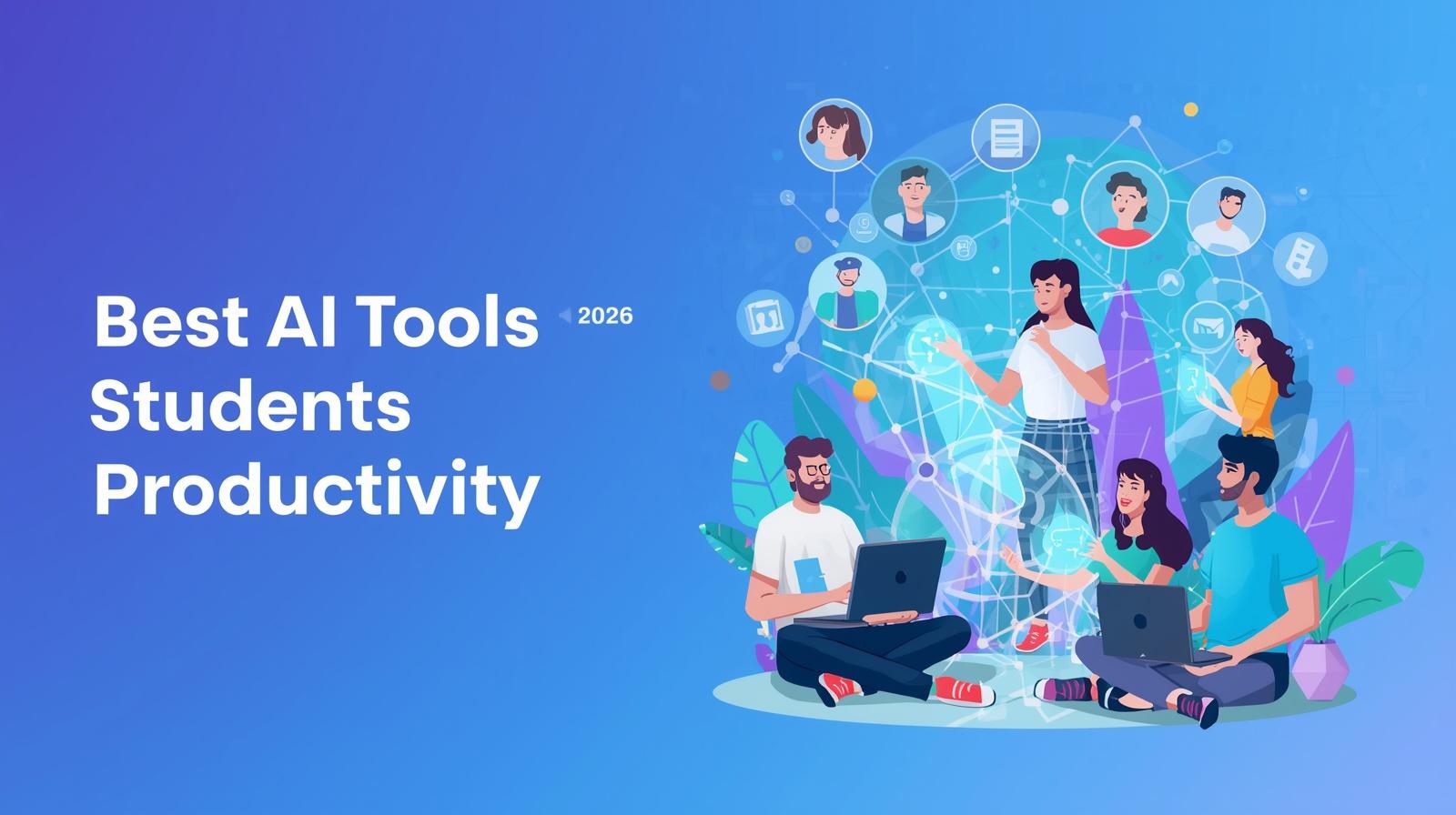
In 2026, students approach learning in a completely different way. AI tools help work smarter by transforming information into insights. From summarizing a 50-page lecture to solving a math problem or fixing a coding bug, these smarter tools serve as personal tutors available 24/7, making education faster, clearer, and manageable.
Technology has bridged critical learning challenges for millions of people. AI homework helper tools deliver step-by-step breakdowns, assist in organizing notes, generating ideas, and improving writing. Access to these essential resources once felt distant; today, smarter tools complement study plans and assignments seamlessly — not to replace learning, but enhance it.
From AI learning platforms to conversational ChatGPT companions, today’s students in 2026 have unprecedented access to tools that deliver information faster, clearer, and more manageable than ever. This marks a defining shift in education where smart technology and the drive to work smarter will shape every learner’s academic trajectory.
Why AI Tools Are a Must-Have for Students in 2026.
Every college student in Pakistan — from Lahore to Karachi — now clearly recognizes: AI tools for students have redefined academic life in 2026. Smarter tools organize, think, and research far faster than previous generations ever did, truly transforming learning resources forever.
A high school student in the USA preparing for entry tests and a university student juggling thesis, exams, and assignments in one semester both benefit. AI-powered study apps serve as a personal academic assistant, handling essay outlines, math problems, flashcards, and writing.
Millions of students across India, the UK, Canada, and Australia now rely on free AI tools to complete assignments, prepare for exams, and conduct research more efficiently. Note-taking, study schedules, and technology-driven productivity have all dramatically transformed — it’s a survival skill.
Machine learning and artificial intelligence are fundamentally reshaping education worldwide. Top AI tools supercharge daily academic routines, condense 200-page textbooks, and guide students to think critically — already shaping job opportunities and university seats while making information convenient, anytime and anywhere.
ChatGPT
ChatGPT has quietly become the backbone of how students draft essays, brainstorm ideas, and break down complex concepts into simple language. Struggling with writer’s block? It generates structured outlines instantly, helping you move from a blank page to a fully structured draft with remarkable speed.
What separates ChatGPT from traditional tools is its ability to function as a personal tutor — explaining difficult topics, answering follow-up questions, and adapting to your learning needs. Students across medical, legal, and scientific disciplines rely on it to simplify and understand challenging material faster.
Grammarly
For students juggling essays, drafts, and tight submission deadlines, Grammarly quietly functions as an indispensable layer of polish — catching grammar, spelling, and tone inconsistencies across Word and browsers before work reaches the intended audience.
What separates Grammarly from basic checkers is its depth in scholarly editing — offering clarity, style checks, citation checks, and sentence flow corrections that make reports genuinely academically sound, sharpening writing skills through formal, readable, academic paper revision.
QuillBot
QuillBot is an AI writing assistant built for students who want to rephrase sentences without losing meaning. It’s especially useful for turning rough research notes into polished, academically sound drafts while avoiding unintentional plagiarism through smart paraphrasing.
Beyond basic rewriting, QuillBot supports tone adjustments and rewriting that strengthen argument structure and conceptual coherence. Students looking to save time, enhance quality, and sharpen their prose will find it among the most versatile and essential tools for academic success.
Top AI Tools for Research and Assignments
Perplexity AI stands as a must-have AI-powered search engine delivering cited answers and up-to-date research instantly. Unlike traditional search engines, it pulls credible, sourced answers in real time — a true game-changer for PhD students, MBA students, and law students alike.
Elicit AI paired with QuillBot forms the best combination for drafting and paraphrasing research notes without unintentional plagiarism. Meanwhile, NotebookLM lets students upload PDFs and lecture notes, generating study guides, summaries, and explanations — saving remarkable time and effort.
Perplexity AI
Unlike traditional search engines, Perplexity AI functions as an AI-powered search engine that delivers reliable, citation-backed answers with direct sources — making quick research feel less like digging and more like discovering.
Students writing research papers benefit from how it handles academic sources and aids in structuring argument flow. It doesn’t replace thinking — it sharpens it, bridging the gap between raw AI-generated information and credibility.
Notion AI
Notion AI transforms study time by helping students organize ideas, draft structured summaries, and build smart to-do lists — all within one workspace. Its ability to generate notes from PDFs or lecture slides feels genuinely powerful.
What impresses me most is how it supports personalized learning — you plan, assign tasks, track progress, and surface related content in real time, keeping every project deadline and action point always on the same page and clear.
Google Gemini
Google Gemini stands apart as a free, deeply integrated AI companion built for college students navigating heavy academic loads — from draft essays to decoding complex concepts through remarkably simple language that sticks.

Unlike conventional AI writing assistants, Gemini connects across Google Docs, summaries, and real-time study schedule planning, making it genuinely versatile for students who need organized, focused academic assistance without switching platforms constantly.
Elicit
Elicit transforms how students handle academic papers, automating summaries and extracting key points from long papers without manual effort. Researchers gain a deeper understanding through insights that surface hidden patterns across saved research papers efficiently.
Unlike basic AI tools for school work, Elicit provides structured assistance with citations and highlights, ensuring original work stays intact while avoiding plagiarism. It genuinely helps complement learning rather than replacing critical thinking entirely.
NotebookLM (Google)
NotebookLM revolutionizes how students interact with PDFs, saved research papers, and slides — converting uploaded documents into study guides, summaries, and structured reports within seconds, making passive review genuinely productive.
Unlike traditional AI apps, it transcribes thinking directly from lecture notes, typed notes, and handwritten notes, generating quizzes, explanations, and key points from your own notebooks — personalizing every study schedule with contextual precision.
Top AI Tools for Design, Language, and Maths
From personal experience navigating academic success, tools like Wolfram Alpha redefine how students tackle math — delivering instant explanations and practice questions far beyond what traditional methods offer, genuinely advancing understanding concepts with measurable precision and depth.
Quizlet AI sharpens language mastery through active recall, while design-focused platforms complement learning by transforming complex ideas into visual clarity — helping students thrive across disciplines, replacing passive reading with engaging, interactive experiences that build real, lasting confidence.
Best AI Writing Assistants for Academic Success
Students navigating research papers, university applications, and cover letters often discover that AI writing assistants like Grammarly silently transform their workflow. From catching grammar errors to adjusting tone, these tools make essays feel professionally crafted, academically sound, and genuinely error-free without sacrificing authenticity.
ChatGPT helps college students push past writer’s block by generating structured outlines and letting them draft essays in simple language. QuillBot excels at rephrasing sentences effectively, while Perplexity surfaces reliable research papers for PhD students, MBA students, and law students seeking credible academic grounding fast.
AI-Powered Study and Revision Tools
Serious revision rarely happens in one sitting — it compounds. Tools like Quizlet have quietly evolved beyond flashcards, now leveraging spaced repetition to reinforce long-term memory retention in ways that feel less like studying and more like calibrated recall training. NotebookLM lets students upload their own documents and notes, then generates quizzes that interrogate their actual material — not generic content. Perplexity AI surfaces research papers with cited sources, which medical students and science-track learners find indispensable when depth matters.
What separates good revision from forgettable revision is personalization. Notion AI transforms scattered notes into structured summaries and quiz questions, making it genuinely useful for students with ADHD who struggle to stay focused. Meanwhile, NotebookLM (Google) functions as a private tutor embedded in your own uploaded material. Having tested several platforms myself, the ones built around your content — not templated prompts — consistently produce stronger review outcomes. The shift from passive reading to active AI-assisted interrogation is where real retention begins.
AI Note-Taking and Organization Apps
Taking notes efficiently has always been a challenge for students, but AI note-taking tools have redefined how learners organize and review their academic material efficiently. These smart workspace platforms allow you to upload content, generate summaries, and create quiz questions from lecture slides automatically.
Working with Notion AI personally revealed how its AI capabilities genuinely support focused and productive sessions, especially for students managing ADHD. Available across mobile and desktop, it functions as one of the most versatile AI apps for studying, enabling smart to-do lists that plan your entire week intelligently.
Beyond basic to-do lists, modern AI-powered study tools transform raw material into structured notes with contextual depth. Whether organizing research or scheduling revision, these tools function as your personal study coach, making academic organization seamless. The smartest students use them not as shortcuts, but as a study companion.
AI Tools for Time Management and Scheduling
Students today struggle less with what to study and more with when. Clockwise, a smart calendar assistant, quietly rearranges your day by minimizing interruptions and carving out focus time between meetings and productive blocks. Motion goes further — its task list engine reads your deadlines, availability, and calendar, then automatically schedules tasks and adapts as priorities shift.
Reclaim AI builds deep work sessions around your study habits and routines, intelligently slotting time blocking between meetings automatically. ClickUp AI layers project management on top — letting you plan, assign priorities, and predict next steps across complex workloads. Meanwhile, AdaptAI senses stress and productivity patterns, intelligently inserting micro-breaks within work bursts using advanced behavioral awareness.
How AI Can Improve Collaboration in Group Projects
Group projects often collapse under collaboration gaps — missed deadlines, inconsistent voice, and poor organization. Tools like Miro AI let teams brainstorm visually, generate diagrams, and co-create plans in real time. Google Docs with AI delivers real-time suggestions, reinforcing clarity and collaborative efficiency while keeping shared work aligned across contributors.
AI-Powered Study Tools also enhance group study efficiency by letting classmates annotate and discuss texts collaboratively. Platforms like Slack with AI assistants keep teamwork structured, reducing confusion. Students who understand how to deploy these tools responsibly experience stronger creativity, better problem-solving, and genuinely high-quality results without cutting corners.
Tips for Using AI Tools Ethically in Education
Using AI ethically means treating these tools as personal study companions rather than shortcuts. Students must understand concepts before submitting final work, ensuring their voice remains authentic. Disclose AI assistance openly — institution policies increasingly reward academic integrity over convenience.
Empowering yourself through AI requires balance. Use AI learning tools to improve writing and tackle weak areas, but always verify outputs independently. Responsibly integrating smart scheduling assistants or AI-powered note-taking apps into student life enhances genuine understanding without replacing original thought.
From personal experience working across a complex educational environment, AI works best when it personalizes the learning experience rather than thinking. Whether studying, writing essays, or managing an organization, treat AI as a guide — your collaboration with it should remain powerful, efficient, and always transparent.
FAQ’s
Are AI Tools Free for Students?
Many AI study tools operate on a freemium model — free at the basic level, but locked behind a paywall for advanced features. ChatGPT, for instance, offers solid homework helper and essay writer functionality without spending anything, while paid Plus unlocks faster response times and image analysis. From personal observation across the UAE and South Asia classrooms, most students never actually need the premium tier to begin their academic journey.
That said, tools like Grammarly handle spelling, clarity, and polishing writing across Google Docs, Microsoft Word, and browsers entirely free — making them genuinely practical for daily use. Notion AI keeps students focused and productive on both mobile and desktop without upfront costs. The truth: between ChatGPT, Grammarly, and Notion AI, a student can save time, enhance quality, and stay organized without paying a single rupee.
How Can Students Use AI Tools Ethically?
Using AI ethically begins with understanding that these tools function as an assistant, never a replacement for genuine thought. Students who cite AI assistance openly and operate with honesty protect their academic integrity without cutting corners. Treating AI like a research assistant means verifying outputs against credible sources, especially scientific ones, while ensuring sensitive data and personal information never enter AI platforms responsibly undermined by careless sharing habits.
Academic standards demand that students submit work written in their own words, using AI only for editing rather than ghostwriting entire essay drafts. Universities and every institution enforce policies that violate trust when students pass AI-written work as original. Always cross-check facts, cite AI-generated content properly, retain ownership of your learning process, and use these tools to enhance learning, simplify the search process, and save time without surrendering accountability over your concept development.
Which AI Tool Is Best for Writing Research Papers?
When reviewing research paper quality, tools like Paperpal and Wordtune consistently outperform generic alternatives. Scholarcy breaks down dense academic sources while XtraGPT delivers curated structural notes. From personal experience, Grammarly catches argument-level clarity gaps that writers miss entirely. These platforms don’t just polish writing — they reshape how researchers brainstorm ideas, process complex concepts, and build academically credible, publishable work with measurable precision.
Paperpal integrates directly with Microsoft Word and Google Docs, making it indispensable for students who edit drafts across browsers without switching platforms. Unlike purely conversational AI, dedicated academic tools provide insights specific to citation integrity and argument cohesion. ChatGPT works well as a starting point, but research paper refinement demands specialized AI capabilities — tools that understand scholarly tone, complement human reasoning, and transform a rough output into a compelling final product.
Conclusion
AI learning tools have reshaped how the youngest populations approach education, turning necessity into opportunity. Scientifically proven methods now integrate seamlessly with technology, helping students manage large volumes of coursework with clarity. From completing tasks efficiently to achieving professional success, these tools redefine academic standards. As someone who has observed this shift firsthand, the transformation is undeniable — students today are more equipped than ever before.
Every student deserves access to professionally trained intelligence that simplifies their AI learning tools journey. Whether navigating competitive exams or career-defining projects, the right tools make measurable differences. This isn’t about replacing effort — it’s about directing it smarter. The future belongs to those who adapt early, leverage available resources wisely, and build habits that carry beyond graduation into every professionally demanding environment they’ll encounter.



One Comment
Comments are closed.