
Introduction
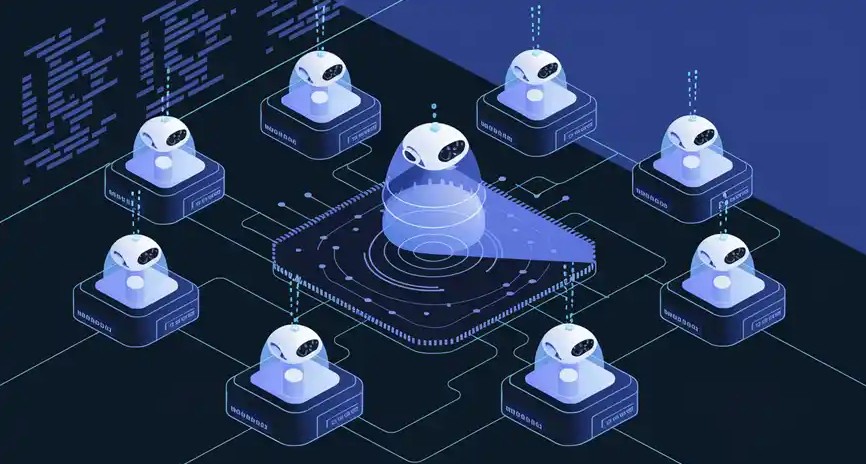
Modern cybersecurity has outgrown the limitations of single-system defenses. Multiple AI agent working in concert represent a fundamental shift — one where distributed architecture enables intelligent systems to autonomously process threats across complex environments simultaneously, outpacing conventional tools considerably.
What genuinely surprised me working within this space was how threat intelligence sharing between agents reshapes response timing entirely. Instead of sequential analysis, these systems detect anomalies across layered environments concurrently, compressing hours of investigation into seconds through coordinated machine reasoning.
The architectural brilliance lies in how agents collaborate without centralized bottlenecks. Each node carries independent analytical capability while contributing to collective awareness. Systems designed this way automate responses with precision that human-only teams structurally cannot match against today’s accelerating attack sophistication.
How Does Multi-AI Agent Security Technology Work?
Multi-AI agent systems operate through machine learning and deep learning layers that collaborate to run threat detection and risk assessment simultaneously. Unlike single AI models, these frameworks apply intelligent decision-making across networks, cloud environments, and digital assets with precision.

What separates this advanced cybersecurity framework from rule-based algorithms is AI-powered automation — enabling multiple AI-powered agents to detect, analyze, and respond to cyber threats in real time without human bottlenecks slowing incident response.
From data breaches to insider threats, modern cybersecurity demands real-time monitoring with high detection accuracy. Businesses relying on traditional security systems often face exposure gaps that multi-AI agent security technology resolves through distributed, autonomous, and automated response mechanisms.
AI-Driven Threat Detection
Modern multi-layered AI defenses don’t just react — they predict. Working across endpoints and cloud applications simultaneously, AI systems analyze network traffic with a precision no human analyst can match, catching what traditional tools consistently miss.
What genuinely surprised me early in this field was how reinforcement learning reshapes threat detection accuracy over time. By processing historical attack patterns, these systems reduce false positives dramatically, allowing security teams to act on real-time threat identification without drowning in noise.
Multiple AI agents operating in parallel evaluate security data from fragmented sources, applying AI-based risk scoring to prioritize response. This architecture directly counters alert fatigue — a silent killer of enterprise security operations that rarely gets the attention it deserves.
Automated Risk Mitigation
When cyber threats surface unpredictably, waiting for human intervention is no longer viable. AI agents now continuously learn behavioral shifts, isolating compromised nodes before damage spreads, fundamentally redefining how organizations handle automated risk response at machine speed.
Real-time monitoring allows systems to cross-reference attack patterns against live threat detection pipelines. Rather than reacting, predictive analytics anticipates breach trajectories — particularly against zero-day vulnerabilities — giving security architectures a decisive, proactive edge competitors still underestimate entirely.
Automating responses eliminates costly manual threat analysis, dramatically reducing time and resources burned on repetitive triage. Mitigating cyber threats through intelligent orchestration means critical infrastructure security stays resilient, even when sophisticated cybercriminals deploy coordinated, multi-vector campaigns simultaneously across environments.
Self-Learning Security Systems
Traditional defenses crumble where AI agents thrive — not by following rules, but by rewriting them. Through continuous AI training, these systems analyze unusual network activity, refining judgment faster than any human oversight team could realistically manage or sustain.
What separates self-learning architecture from static tools is its grip on anomaly detection. Systems that continuously learn from real cybersecurity datasets develop sharper instincts around suspicious patterns, ultimately reducing misclassification errors that flood SOCs with noise instead of actionable intelligence.
Every iteration strengthens the model. By processing AI-generated security logs alongside machine learning feedback loops, these systems adapt autonomously — tightening responses against evolving cyber threats while building institutional memory that traditional rule-based platforms fundamentally cannot replicate.
Real-Time Security Monitoring
Modern multi-AI agent security technology doesn’t just watch networks passively — it interrogates every data packet with intent. Working across corporate networks and cloud applications, these systems flag adversarial AI behavior before conventional tools even register an anomaly worth investigating.
What separates serious deployments is AI-driven monitoring paired with adapting security responses — a loop that tightens with every emerging threat encountered. Electronic health records, national security systems, and financial institutions each demand this precision without tolerating alert fatigue or false positives.
The systems I’ve worked alongside handle incident response by cross-referencing AI threat intelligence databases against live behavioral signals. Human oversight remains non-negotiable here — machines surface the pattern, practitioners validate legitimate user activity, and automated security policies execute containment with zero operational downtime.
Adaptive Cybersecurity Framework
An adaptive cybersecurity framework continuously evolves by leveraging multiple AI models that detect and mitigate shifting cyber threats in real time, ensuring organizations maintain resilient defenses without relying on static, outdated rule-based protection strategies that criminals routinely bypass.
Automated Security Operations
Modern automated security policies no longer wait for human intervention — they act first. Through AI-based threat intelligence, systems now preemptively identify behavioral anomalies, allowing organizations to neutralize threats before damage escalates across attack patterns within distributed network environments.
What makes this shift remarkable is how predictive analytics quietly repositions defense from reactive to anticipatory. When zero-day vulnerabilities surface, automated pipelines cross-reference log analysis against historical breach signatures, triggering incident response workflows without manual escalation delays.
The operational maturity here lies in forensic investigations running parallel to live threat containment. While vulnerabilities get patched in real time, behavioral engines simultaneously analyze future attack vectors, continuously strengthening defenses through machine-learned pattern recognition across enterprise-scale environments.
Enhanced Protection Against AI-Powered Attacks
Multi-agent systems have redefined how we approach cyber threats by distributing forensic investigations across specialized nodes, allowing sensitive data to stay shielded even when attackers deploy sophisticated, AI-generated exploits targeting enterprise-grade environments simultaneously.
Enterprise Cybersecurity
Enterprises today face unprecedented challenges as sophisticated cybercriminals continuously evolve their tactics. Multi-AI agent systems establish coordinated cyber defense layers, where distributed agents simultaneously monitor digital assets, flagging anomalies before breaches materialize across complex organizational infrastructures.
AI-powered threat detection has fundamentally reshaped how organizations respond to cyber threats. Rather than reactive measures, integrated agents apply deep learning to recognize behavioral deviations, enabling automated risk response mechanisms that engage within milliseconds, dramatically reducing exposure windows during active intrusion attempts.
What practitioners rarely discuss is how real-time monitoring compounds security effectiveness exponentially. Each agent’s findings feed collective predictive analytics intelligence, strengthening advanced security model accuracy over time, creating self-reinforcing protection ecosystems that grow increasingly resilient against evolving cyber threats targeting enterprise environments.
Financial and Banking Security
Financial institutions face deepfake attacks and AI-generated malware deployed by sophisticated cybercriminals targeting transaction systems. Enterprises rely on deep learning to detect phishing attacks and ransomware before exploited, breaches escalate, while AI-powered behavioral analysis continuously monitors unusual account activity, strengthening institutional defenses against evolving cyber threats effectively.
Healthcare Data Protection
Healthcare providers deploy multi-AI agent systems to guard sensitive data against advanced persistent threats and malware. With AI-driven behavioral analysis, agents monitor access patterns, detect unauthorized transactions in billing systems, and enforce data protection regulations, ensuring patient records stay protected through automated security policies.
Government agencies handling classified operations increasingly rely on AI-powered predictive analytics to counter sophisticated intrusions. Unlike commercial sectors, defense environments demand zero tolerance for zero-day vulnerabilities, where delayed detection equals catastrophic exposure across entire national infrastructure systems.
Advanced cyber defense architectures within military networks now deploy agents that perform log analysis and forensic investigations simultaneously, compressing incident timelines dramatically. From firsthand observation, fragmented legacy systems remain the weakest entry point that adversaries actively exploit during coordinated APT campaigns.
Automating response actions against attack vectors targeting defense grids requires more than rule-based systems. AI-based threat intelligence enables agencies to preemptively strengthen defenses, identifying emerging threats before operators even flag anomalies, fundamentally reshaping how sovereign cybersecurity posture gets maintained operationally.
AI Model Coordination and Compatibility
When multiple AI security systems operate together, encryption ensures seamless communication between agents without exposing vulnerabilities. Threat detection improves significantly when coordinated models share predictive analytics, reducing manual threat analysis and enabling automated responses across distributed security environments efficiently.
Data Privacy and Compliance Issues
Compliance with HIPAA and GDPR becomes critical when multi-agent AI systems actively process sensitive EHRs. Without enforced AI governance, these platforms risk exposing personal health data, enabling fraud, identity theft, and triggering severe regulatory penalties.
Insider threats and cyberattacks demand robust threat response mechanisms from AI systems. Mitigating cyber threats requires organizations to wisely invest time and resources into detecting attack patterns early, ensuring incident response stays decisive and effective.
State-sponsored cyberattacks targeting critical infrastructure security expose real vulnerabilities. Seamless collaboration through integration of AI-assisted security operations centers helps neutralize threats, improving threat detection accuracy and delivering maximum protection against future attack vectors across networks.
AI Bias and False Positives
AI bias quietly undermines threat detection across sectors. An AI-driven cybersecurity system built on unbalanced training data produces false positives that overwhelm existing security infrastructure, forcing analysts to sift through noise instead of addressing real threats.
Overcorrecting for attack vectors without addressing bias causes alert fatigue. AI-powered network monitoring and cloud security tools must meet GDPR, CCPA, and ISO 27001 standards, ensuring risk response protocols remain legally sound and operationally credible.
False positives grow increasingly costly in endpoint security, where misclassified alerts delay response. Flagging suspicious banking activities incorrectly erodes institutional trust, exposing poorly calibrated, bias-prone AI detection models operating without sufficient human oversight or correction.





4 Comments