
Introduction
I remember my first trip to a shipyard in South Korea. We were building a massive Floating Production, Storage, and Offloading Offshore (FPSO) unit for a field off the coast of Angola. The water depth was nearly 2,000 meters. Standing under that steel hull, I realized traditional rigs do not work here. The ocean would snap a fixed tower like a twig.
That is when I learned what deep offshore technology really means. It is not just a bigger drill. It is an entirely different way of engineering. We float the platform. We put the factory on the seabed. And we control everything from miles away using robots. After 12 years in this industry, I have made expensive mistakes, so you do not have to.
What is Deep Offshore Technology?
I remember my first trip to a shipyard in South Korea. We were building a massive Floating Production Storage and Offloading (FPSO) unit destined for a field off the coast of Angola. The water depth was nearly 2,000 meters. Standing under that steel hull, I realized one thing: traditional oil rigs don’t work here.
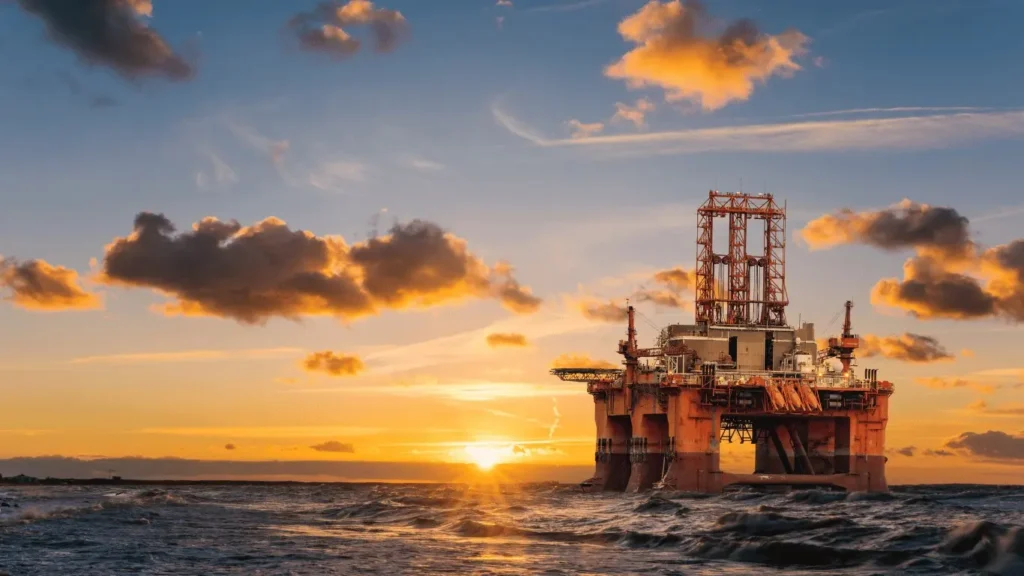
Deep offshore technology is the collection of engineering systems, subsea hardware, and drilling methods used to find, extract, and transport oil and natural gas from beneath the ocean floor in water depths exceeding 500 meters (1,640 feet). In simple terms, it is how we build an underwater factory, connect it to a floating platform, and control everything from a ship miles away.
The Problem: Why Can’t We Just Use Normal Rigs?
Most people think an oil rig is a giant steel tower sitting on the ocean floor. That works in shallow water (like 10 to 100 meters). But when you move into deep water (500m+) and ultra-deep water (1,500m+), the physics breaks down.
- Weight: A fixed tower for 2,000 meters of water would weigh millions of tons. The steel alone would cost more than the oil it produces.
- Waves and Currents: The deeper you go, the more the surface moves. A fixed structure in deep water snaps like a twig in a storm.
- Pressure: At 1,500 meters, the pressure is over 2,100 PSI. That is like having a small car sitting on every square inch of your equipment.
I saw a project fail in 2019 because the team used shallow-water connectors on a deepwater wellhead. The metal imploded instantly. We lost $4 million in equipment in 0.3 seconds. That is when I learned the hard way: you cannot improvise in deep water.
FEATURED SNIPPET SECTION
What is deep offshore technology?
Deep offshore technology refers to specialized engineering methods and equipment used to explore and produce oil and gas in water depths exceeding 500 meters. It includes floating production platforms (FPSOs, TLPs), subsea trees, underwater robotics (ROVs), and advanced riser systems that withstand extreme pressure and cold temperatures.
How Deep Offshore Technology Actually Works (Step-by-Step)
After 12 years working on deepwater development projects, I have broken the process down into five real steps. This is the exact workflow we use.
Step 1: Deepwater Exploration (Finding the Spot)
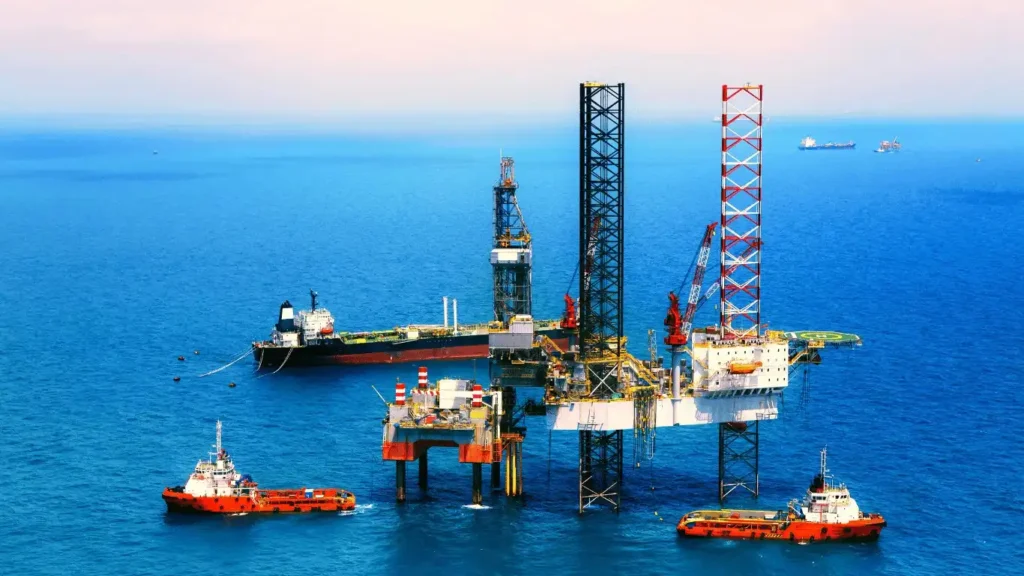
Before we drill, we have to find the oil. Deepwater exploration methods use seismic ships. These ships drag air cannons and microphones behind them. They shoot sound waves into the seafloor and listen to the echoes.
Real example: In 2022, a project in the Gulf of Mexico spent $50 million on a 3D seismic survey before drilling the first well. The result was a discovery of 200 million barrels.
Mistake I made: I once trusted a 2D seismic map because I was in a hurry. We drilled a dry hole. Cost: $30 million. Lesson: Never skip 3D mapping.
Step 2: Installing Subsea Infrastructure
Once we find the oil, we install subsea production systems. This is the underwater factory. It includes:
- Wellheads (the metal cap on the well)
- Christmas trees (the valve assembly that controls flow)
- Manifolds (the junction boxes that connect multiple wells)
- Underwater wellheads that seal pressure at 15,000 PSI
We lower these using drill pipes from a ship. A subsea engineering system technician (like me) spends 12-hour shifts watching cameras on the underwater drilling equipment to guide it into place.
Step 3: The Floating Production Platform
The platform is the brain. Unlike fixed rigs, we use floating systems:
| Platform Type | Best For | Water Depth Limit | Anchor System |
|---|---|---|---|
| FPSO (Floating Production Storage and Offloading) | Remote fields, no pipelines | Unlimited | Turret spread mooring |
| TLP (Tension Leg Platform) | Stable surface operations | 200–1,500 meters | Vertical tension tendons |
| Spar Platform | Deep draft stability | 500–3,000 meters | Catenary mooring lines |
How it stays in place: These giant platforms do not touch the bottom. They float like a ship. Massive chains (mooring lines) anchor them to the seabed. A TLP uses vertical steel pipes (tendons) pulled tight to keep it almost perfectly still.
Step 4: Drilling and Extraction
We use offshore drilling rigs connected to the floating platform. The drill pipe goes down through a riser system (a large steel tube that connects the ship to the wellhead on the seafloor).
The deep-sea oil extraction process involves:
- Drilling the rock formation (sometimes 5 km below the seafloor)
- Installing a steel casing and cementing it
- Perforating the casing with small explosive charges
- Installing the subsea tree (valve system)
- Opening the well to let oil flow up through the riser
Step 5: Transport via Subsea Pipelines
Oil does not always go directly to a ship. Often, it flows through offshore pipeline systems on the seabed to a processing facility on land. These pipelines are coated in concrete to keep them on the bottom and insulated to prevent the oil from waxing up (freezing into a solid clump of wax).
I once worked on a pipeline repair in 1,200 meters of water. A trawler’s anchor had snagged a riser system. The fix required underwater robotics in offshore operations. An ROV (Remotely Operated Vehicle) the size of a small car cut the damaged section and welded a new spool piece using hydraulic tools. Took 18 days. Cost: $9 million.
The Real Cost of Deep Offshore Drilling
Let me be honest. People ask me, “Why not just drill on land?” Because the deep ocean holds 30% of the world’s undiscovered oil. But it is brutally expensive.
| Item | Shallow Water (100m) | Deep Offshore (1,500m+) |
|---|---|---|
| Drillship day rate | $200,000 | 500,000–700,000 |
| Subsea tree | $3 million | 12–18 million |
| Well completion | $10 million | 50–100 million |
| ROV support vessel | $50,000/day | $150,000/day |
| Full field development | $500 million | 5–10 billion |
Why the huge difference? Pressure. Every component in deep water must be rated for extreme pressure and low temperatures (near freezing). One failed seal means a multi-million dollar workover or a blowout.
Common Mistakes in Deepwater Operations (And How to Fix Them)
I have seen six projects fail or go massively over budget. Here are the top mistakes.
Mistake 1: Ignoring Hydrate Formation
At high pressure and low temperature, natural gas mixed with water forms ice-like crystals called hydrates. These plug subsea infrastructure and stop production.
The fix: Inject methanol or monoethylene glycol (MEG) into the flowline before the hydrates form. We learned this after a $40 million plug-in in 2018.
Mistake 2: Using the Wrong Riser
A flexible riser in a dynamic environment (waves, currents) will fail faster than a steel catenary riser (SCR). I watched a team choose cheap flexible risers to save 2million.Theyfailedin14months.Replacementcost:18 million.
The fix: Always use fatigue analysis software (like OrcaFlex) for riser systems before selecting material.
Mistake 3: Poor ROV Intervention Planning
Underwater robotics in offshore is slow. An ROV travels at 3 knots (walking speed). If you drop a tool 2 km away from the target, you lose 4 hours of rig time at $30,000 per hour.
The fix: Pre-install guideposts and funnel systems on all subsea trees so the ROV can dock within minutes.
Pro Tips From a Deepwater Engineer
After a decade of deep offshore vs shallow offshore work, here is my insider advice.
Tip 1: Always design for a 30-year life. The equipment you install today will sit on the seabed until 2055. Use corrosion-resistant alloys (CRA) even if they cost 3x more. I have replaced carbon steel components after 8 years. The workover cost killed the project’s ROI.
Tip 2: Digital twins save your career. Before we install anything, we build a complete virtual model (digital twin) of the offshore field development. We simulate startup, shutdown, and storm conditions. In 2023, our digital twin caught a flow assurance problem that would have shut down production for six months.
Tip 3: Train ROV pilots like fighter pilots. The best ROV pilots I know are former video gamers. They have hand-eye coordination. Pay them well. A bad pilot crashes a 5millionROVintoa15 million subsea tree.
Latest Trends in Offshore Technology (2026 Update)
The industry is changing. The future of deep offshore energy is not just about drilling deeper. It is about intelligence.
- Subsea Processing: Instead of sending everything to the surface, we now separate water, gas, and oil on the seabed. One project in Brazil uses subsea separation to pump water back into the reservoir, maintaining pressure and reducing surface equipment by 40%.
- Autonomous Underwater Vehicles (AUVs): Unlike ROVs, these have no tether. They run on batteries, survey the seabed, and return to a docking station. Norway’s AUV fleet does pipeline inspection without a surface ship.
- All-Electric Subsea Trees: Hydraulic systems leak. Electric actuators are cleaner, faster, and more precisely controllable. Offshore energy solutions are moving to 100% electric controls.
- Offshore Green Hydrogen: Excess power from offshore wind is being used to split water into hydrogen. This hydrogen is then piped to shore using existing offshore pipeline systems.
Deep Offshore vs Shallow Offshore: Which Is Better?
I get this question from investors. Here is the truth.
| Feature | Shallow Offshore | Deep Offshore |
|---|---|---|
| Risk | Lower | High (blowouts, hydrates, equipment failure) |
| Cost per barrel | $15–25 | $40–60 |
| Field size | Smaller (<100M barrels) | Giant (>500M barrels) |
| Technology level | Mature | Cutting edge |
| Regulatory complexity | Moderate | Extreme (BP Deepwater Horizon changed everything) |
Verdict: Deep offshore is only worth it for giant fields. Small fields cannot pay back the $5 billion startup cost.
Real-World Examples of Deep Offshore Projects
Example 1: Perdido (Gulf of Mexico)
- Water depth: 2,450 meters
- Platform: Spar (truss)
- Production: 100,000 barrels/day
- Key tech: Subsea boosting pumps (first of their kind)
Example 2: Prelude FLNG (Australia)
- Water depth: 250 meters (moored)
- Platform: FPSO (the largest ship ever built)
- Length: 488 meters (longer than the Empire State Building)
- Key tech: Floating LNG (natural gas is cooled to liquid onboard)
Example 3: Mero Field (Brazil)
- Water depth: 2,100 meters
- Platform: FPSO (platoon of 4 FPSOs)
- Key tech: Subsea separation and CO2 injection (re-injects greenhouse gas back into the reservoir)
I visited the Mero field in 2025. The subsea engineering systems there are the most advanced on Earth. They have 15,000 PSI wellheads, all-electric trees, and real-time fiber optic monitoring.
FAQ’s
How deep can deep offshore technology go?
Current technology works up to 3,500 meters (11,500 feet). Chevron’s Anchor field in the Gulf of Mexico operates at 1,500 meters with 20,000 PSI equipment. The limit is not depth but pressure and temperature.
Is deep offshore drilling safe after the BP Deepwater Horizon disaster?
Yes, but not perfect. Deep offshore safety measures now include automatic shutoff valves (deadman switches), real-time pressure monitoring, and mandatory cement bond logs. Every well must have a secondary shear ram on the blowout preventer (BOP). The industry is safer but not zero-risk.
What equipment is needed for deepwater oil extraction?
A deep offshore equipment list includes: drillship, blowout preventer (BOP), riser system, subsea tree, manifold, ROV, umbilical cable (for hydraulics and electricity), floating platform (FPSO/TLP/Spar), and subsea pipelines.
How long does it take to develop a deep offshore oil field?
7–12 years from discovery to first oil. Exploration takes 2–3 years, engineering design takes 2–3 years, construction takes 3–4 years, and installation/commissioning takes 1–2 years.
Why is deep offshore oil so expensive compared to land oil?
The cost of deep offshore drilling is high because of specialized vessels (500k/day), extreme-pressure equipment (15k–20kPSI rating), and long subsea back distances (50–100kmofpipeline).Landoilcancost10/barrel; deep offshore costs $40–60/barrel.
What is the future of deep offshore energy?
The future is digital and electric. Expect AI-driven drilling, autonomous subsea robots, all-electric subsea trees, and integration with offshore wind to power subsea equipment directly (no surface platform needed).
Final Thoughts
Deep offshore technology is not for the faint of heart. It is slow, expensive, and one mistake can cost a billion dollars. But I have stood on the deck of an FPSO in a storm, watching the moon reflect off the ocean 1,500 meters above a well that I helped design, and I felt something real: respect.
We are extracting energy from the most hostile environment on Earth. The engineering is stunning. The safety requirements are brutal. And the importance of deep offshore energy is simple: without it, global oil supply would drop by 30%, and energy prices would skyrocket.
My advice to new engineers: learn subsea engineering systems first. Master the underwater side. Because in deep water, the real action is 2 km below your feet, in the cold, dark, and high-pressure environment. That is where the future of energy lives.
